
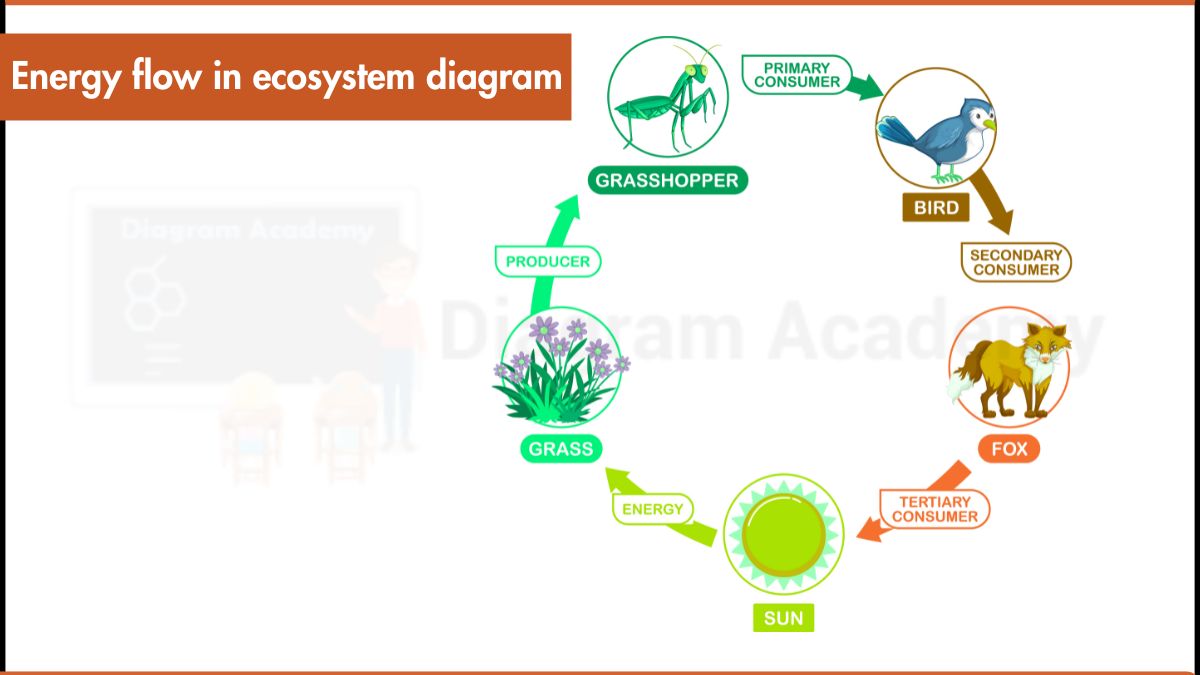
Energy Flow in an Ecosystem
Energy flow in an ecosystem describes how energy moves from the Sun → producers → consumers → decomposers, following a strictly unidirectional path. Green plants (producers) absorb sunlight and convert it into chemical energy through photosynthesis, forming the foundation of all food chains. Because of the First Law of Thermodynamics, energy cannot be created or destroyed, but it transforms from solar energy into food energy stored in plant tissues. As herbivores feed on these plants and carnivores feed on herbivores, energy continues to transfer upward, but a major part of it is lost as heat at every step. This loss of energy is explained by the Second Law of Thermodynamics, which states that during energy transfer, some energy is always wasted. This is why producers have the most energy and why higher trophic levels receive less.
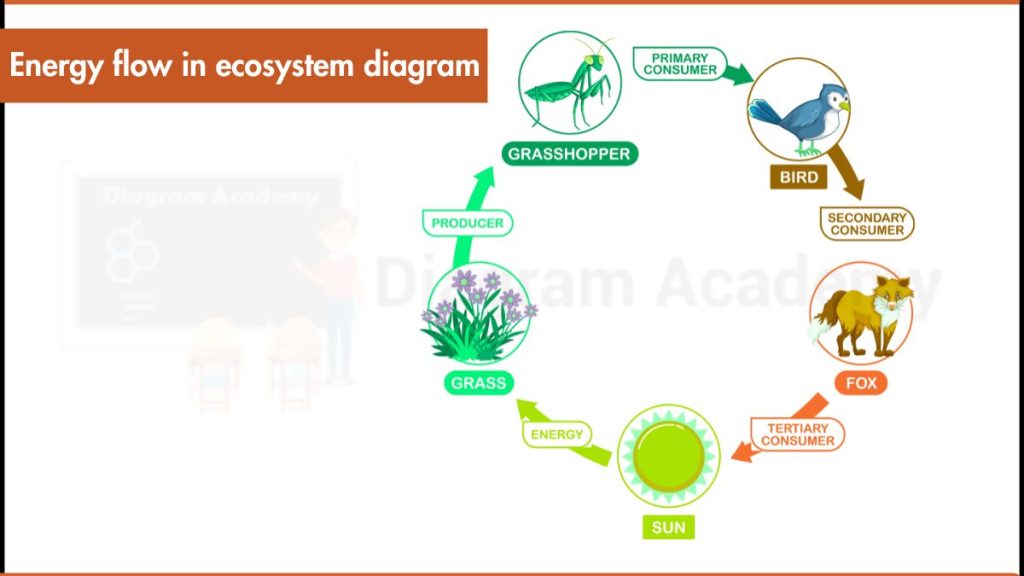
Energy transfer follows the 10% law, meaning only 10% of the energy from one trophic level passes to the next, while the rest is lost. This is best shown in an energy pyramid, where producers form the broad base with maximum energy, herbivores occupy the second level, and carnivores appear at the narrow top with the least energy. Energy moves through different food chains such as the grazing food chain, detritus food chain, and parasitic food chain, but all show the same pattern: energy enters the ecosystem, flows through organisms, and eventually leaves as heat. Matter cycles, but energy does not — it flows in one direction and cannot be reused. This continuous yet decreasing flow of energy supports life and maintains ecological balance.