Tissue culture is an important biotechnology technique used to grow plants under sterile laboratory conditions. A clear tissue culture diagram helps students understand the complete process of plant growth from a small tissue sample.
The diagram of tissue culture is widely used in biology, agriculture, and biotechnology studies because it visually explains how new plants are produced artificially.
What is Tissue Culture?
Tissue culture is the process of growing plant cells, tissues, or organs in a nutrient medium under controlled conditions.
This technique is commonly used in:
- Agriculture
- Crop improvement
- Plantation programs
- Biotechnology laboratories
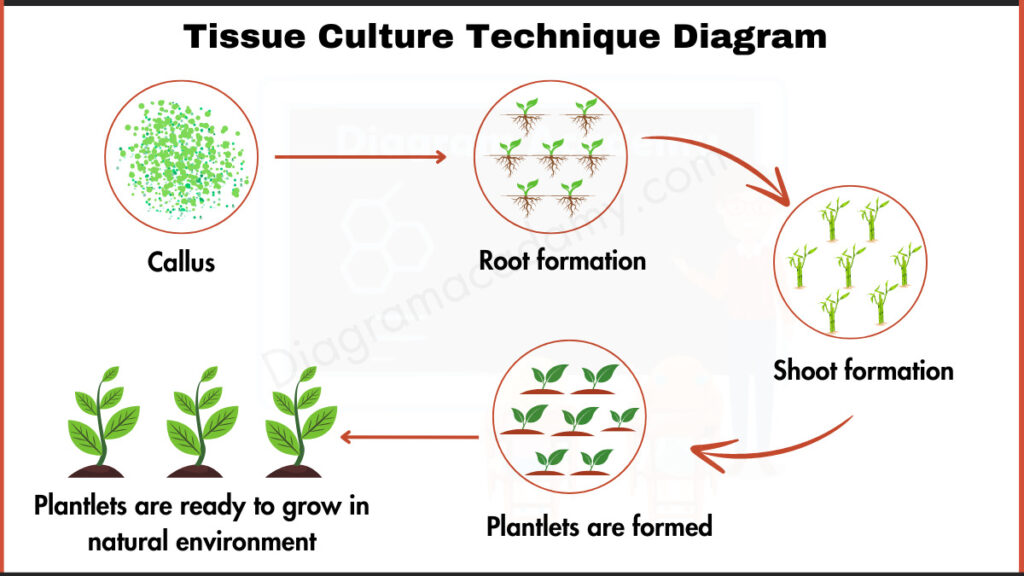
Tissue Culture Process Diagram Explained
The tissue culture process diagram shows several important stages involved in plant tissue culture.
1. Selection of Plant Tissue (Explant)
A small healthy tissue is taken from the parent plant. This tissue is called an explant.
2. Sterilization Process
The explant is sterilized to remove bacteria and fungi before culturing.
3. Callus Formation
The tissue is placed in a nutrient medium where cells divide rapidly and form a mass called a callus.
4. Shoot Formation
The callus develops shoots under suitable growth hormones.
5. Root Formation
Roots begin to grow from the developing shoots.
6. Plantlet Formation
Small complete plants called plantlets are formed.
7. Transfer to Natural Environment
The plantlets are transferred to soil where they continue growing naturally.
Steps of Tissue Culture
| Step Description |
| Explant Selection | Healthy tissue is selected |
| Sterilization | Removal of microbes |
| Callus Formation | Mass of dividing cells forms |
| Shoot Formation | Shoots develop |
| Root Formation | Roots begin growing |
| Plantlet Development | Small plants are formed |
| Transfer to Soil | Plants grow naturally |
Potato Tissue Culture
One common example is potato tissue culture, where disease-free potato plants are produced rapidly using tissue culture techniques.
Benefits include:
- Fast crop production
- Disease-free plants
- Improved agricultural yield
Importance of Tissue Culture Technique
Advantages
Produces large numbers of plants quickly
- Helps preserve rare plant species
- Useful in agriculture and forestry
- Creates disease-free crops
FAQs
Q1: What is a tissue culture diagram?
A tissue culture diagram visually explains the stages involved in growing plants from tissues in laboratory conditions.
Q2: What is callus in tissue culture?
Callus is a mass of undifferentiated cells formed during tissue culture.
Q3: Why is tissue culture important in agriculture?
It helps produce healthy and disease-free plants rapidly.
Conclusion
A tissue culture diagram helps students understand the complete process of plant tissue culture, including callus formation, shoot development, root formation, and plantlet growth. This biotechnology technique plays a major role in modern agriculture and crop improvement.