
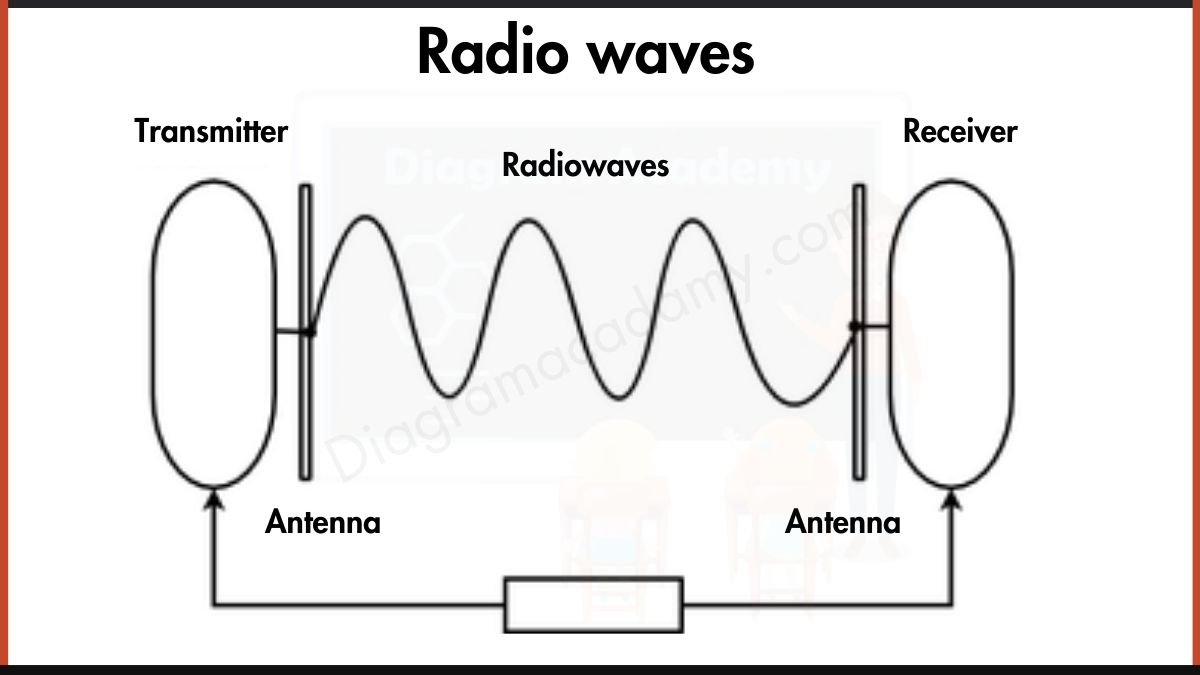
Radio waves are a type of electromagnetic wave used for communication, broadcasting, and wireless technology. Understanding them can be complex, but a clear diagram of radio waves makes learning simple. In this article, we’ll explain the structure, properties, and applications of radio waves with the help of diagrams.
What is a Radio Wave?
A radio wave is an electromagnetic wave that carries information through the air without wires. These waves are commonly used in radios, televisions, Wi-Fi, and mobile networks.
Key Properties:
- Wavelength: Distance between two consecutive peaks of a wave
- Frequency: Number of waves per second
- Amplitude: Height of the wave, showing signal strength
Diagram of Radio Waves
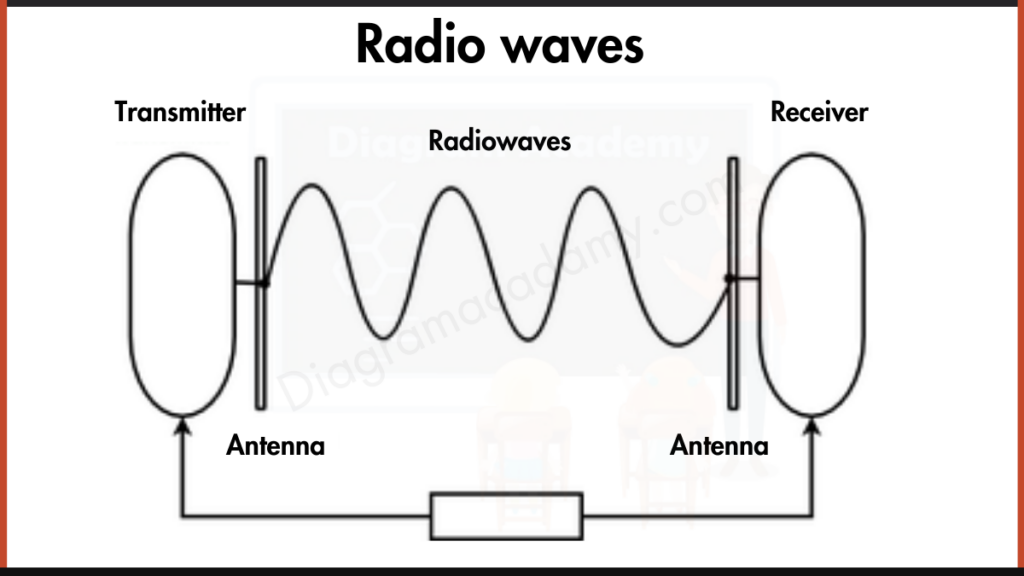
The radio waves diagram visually represents how waves propagate and transmit information. Here’s what it shows:
- Wave Propagation: How waves move through air or space
- Frequency & Wavelength: Differences between high and low-frequency waves
- Applications: Visual cues for radios, antennas, and communication devices
Types of Radio Waves
| Type | Wavelength | Application |
| AM Waves | Long | AM Radio |
| FM Waves | Medium | FM Radio, TV |
| Microwaves | Short | Wi-Fi, Satellite Communication |
Diagram of a Radio
Understanding a diagram of a radio helps see how radio waves are received and converted into sound. Main parts include:
- Antenna: Captures radio waves
- Tuner: Selects the desired frequency
- Amplifier: Boosts the signal
- Speaker: Converts signals into sound
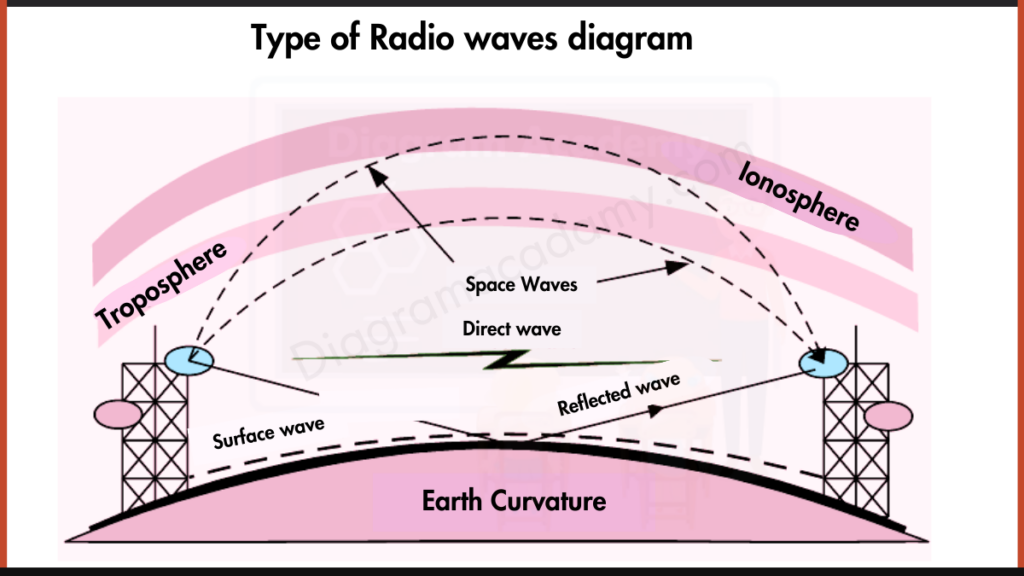
Diagram of Type of Radio waves diagram
FAQs
What is the difference between a radio wave and a diagram of radio waves?
A radio wave is the actual wave that transmits signals, while a diagram shows its structure and behavior visually.
Why are diagrams of radio waves important in education?
Diagrams simplify complex concepts and make learning about electromagnetic waves easy and interactive.
Where are radio waves used?
Radio waves are used in radios, televisions, Wi-Fi, satellite communication, and mobile networks.