Orbital Diagram of Tellurium

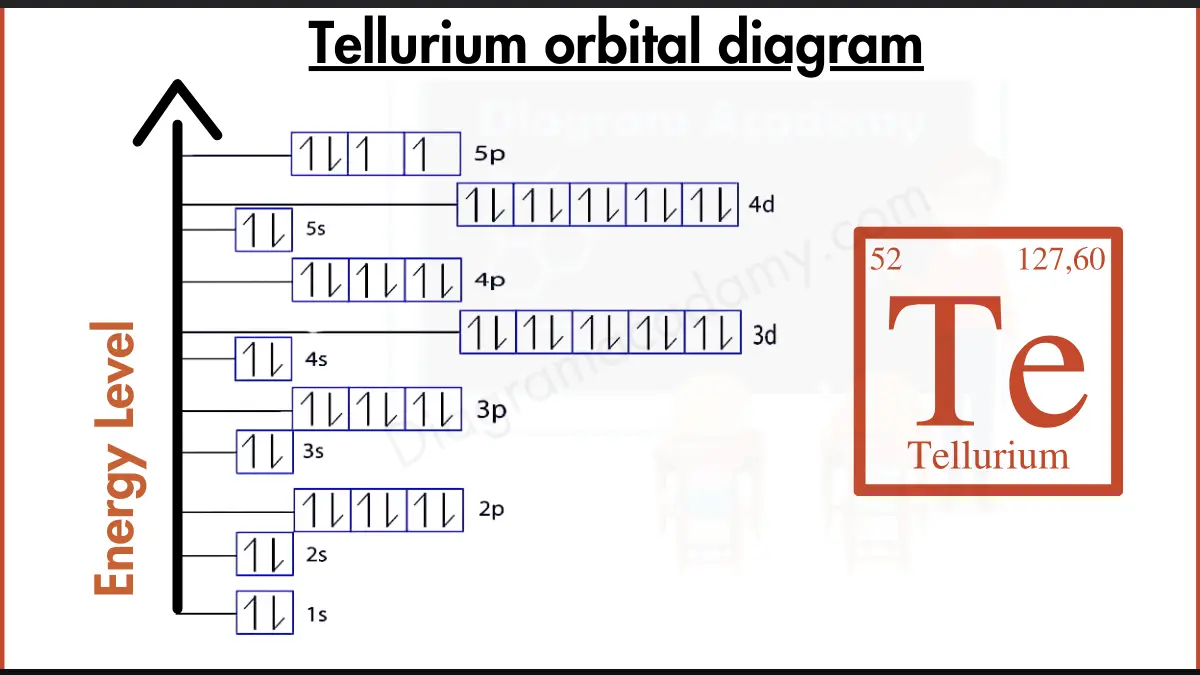
Image showing Orbital Diagram of Tellurium

outer shell of Tellurium (Te) holds six electrons, written as [Kr] 4d¹⁰ 5s² 5p⁴. This configuration shows Tellurium has some ways to go for ultimate stability. While the 4d subshell is filled and the 5s subshell holds two electrons, the 5p subshell isn’t completely full. This incomplete outer shell, compared to noble gases with packed outer shells, makes Tellurium more reactive. Tellurium seeks to gain two more electrons to fill its 5p subshell and achieve the stability enjoyed by its noble gas neighbors.

Orbital Diagram of Xenon

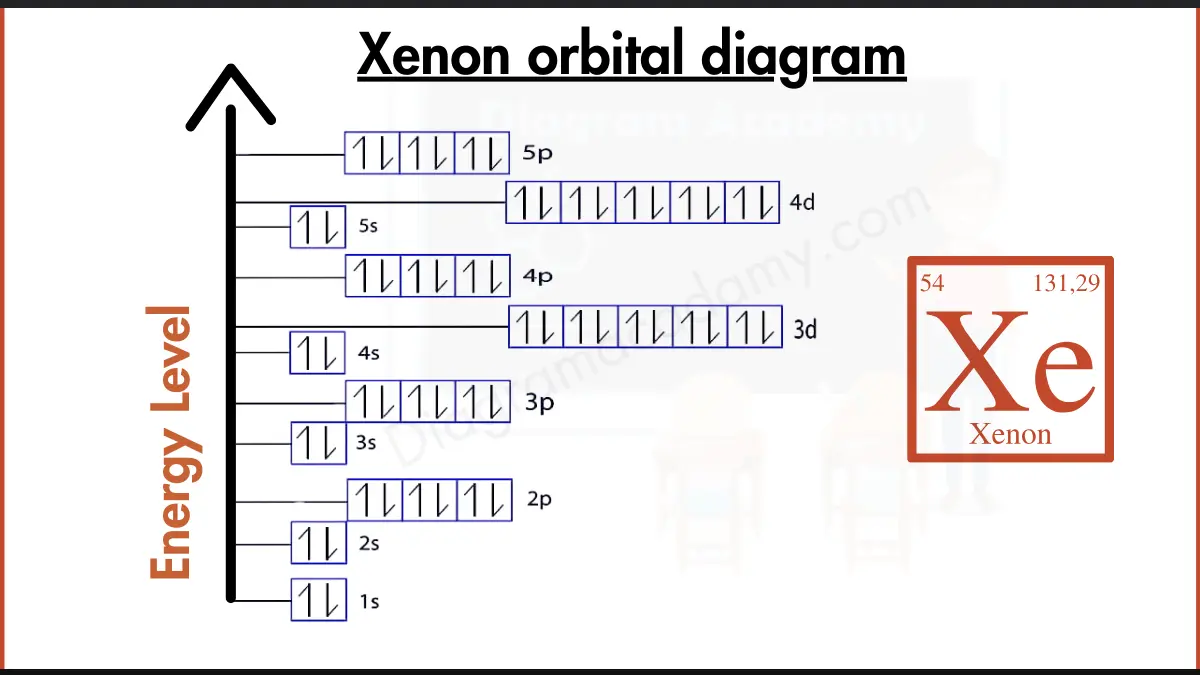
Image showing Orbital Diagram of Xenon

Xenon (Xe) throws a perfect strike in the game of noble gas stability. Its electron configuration, [Kr] 4d¹⁰ 5s² 5p⁶, boasts a completely filled outer shell. This configuration, with electrons occupying all six spots in the 5p subshell, mirrors other noble gases like Krypton (Kr). This complete outer shell is the key to Xenon’s unreactive nature. Just like other members of the noble gas club, Xenon has no need to gain or lose electrons to achieve a stable state, making it very stable and resistant to forming bonds

Orbital Diagram of Silver

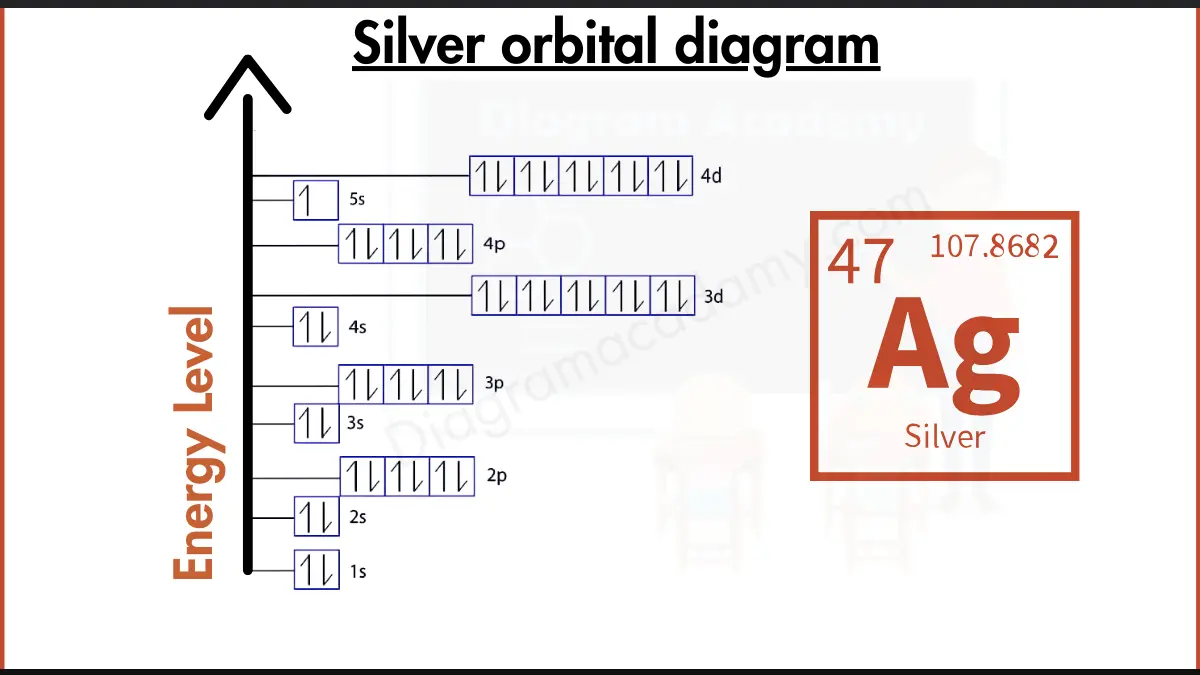
Image showing Orbital Diagram of Silver

Silver (Ag) shines bright with a stable outer shell, similar to the noble gases. Its electron configuration, written as [Kr] 4d¹⁰ 5s¹, showcases a peculiarity. Even though transition metals like Silver typically have partially filled d-orbitals, Silver gains extra stability by completely filling its 4d subshell before placing an electron in the 5s subshell. This unique arrangement, with a full 4d subshell and a single electron in the 5s, makes Silver more stable than most transition metals and contributes to its low reactivity, resembling the behavior of the noble gases with their full outer shells.

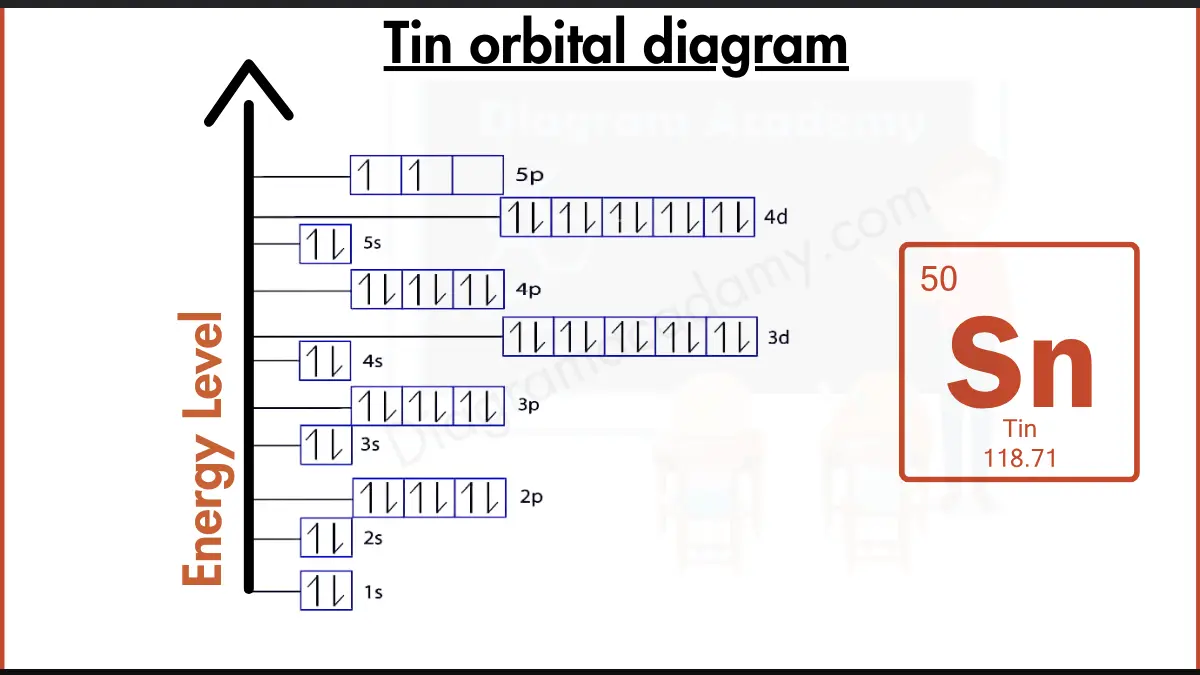
Orbital Diagram of Tin

Image showing Orbital Diagram of Tin

Tin (Sn) treads the line between reactive and stable. Its outer shell holds four electrons, configured as [Kr]4d¹⁰5s²5p². This arrangement showcases a filled 4d subshell and two electrons in the 5p subshell. While not completely full like the noble gases, Tin achieves a certain level of stability compared to elements with more vacancies in their outer orbitals. However, the presence of electrons in the 5p subshell still makes Tin somewhat reactive, especially compared to the completely inert noble gases

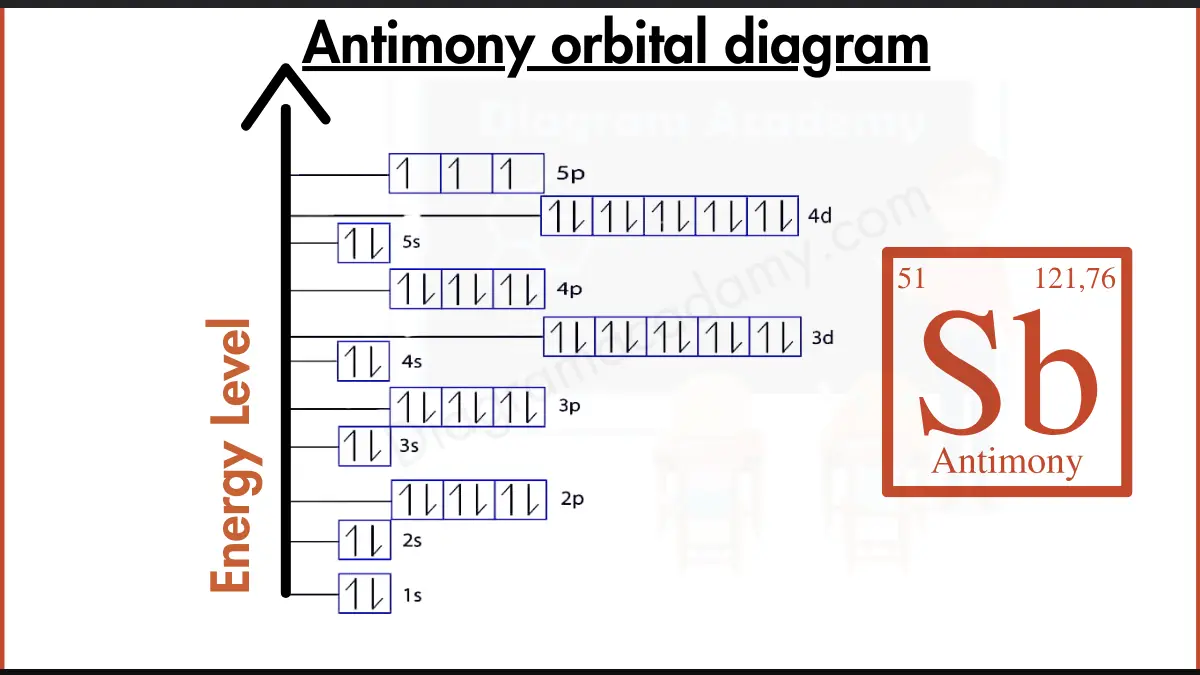
Orbital Diagram of Antimony

antimony orbital diagram showing electron configuration and energy levels

Antimony (Sb) joins the party with the metalloids, having some properties of both metals and non-metals. Its outer shell isn’t completely full, containing five electrons spread across the 5s and 5p subshells ([Kr]4d¹⁰5s²5p³). This incomplete configuration, compared to noble gases with full outer shells, makes Antimony somewhat reactive. It seeks to gain or share electrons to achieve a more stable state, unlike the inert noble gases

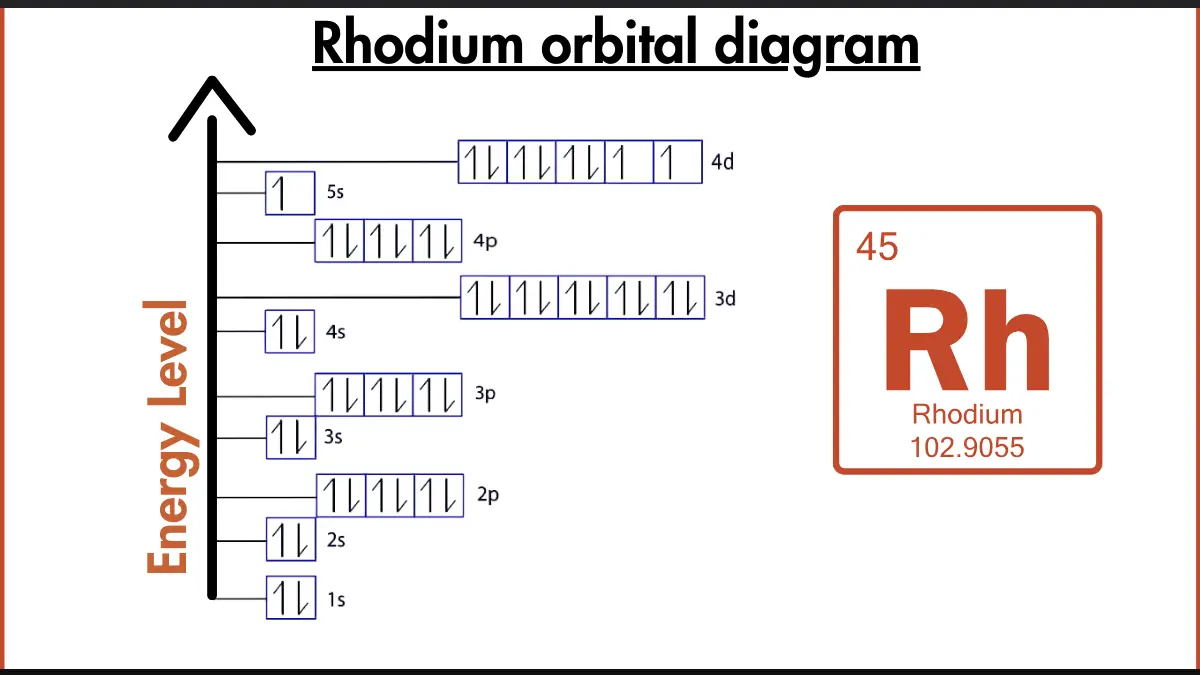
Orbital Diagram of Rhodium

Image showing Orbital Diagram of Rhodium

Rhodium (Rh) isn’t looking to play by the usual rules. While most transition metals have partially filled d-orbitals, Rhodium fills its 4d subshell before the 5s. Its electron configuration, [Kr] 4d⁸5s¹, reflects this unusual stability. This arrangement, with a full 4d subshell and one electron in the 5s, makes Rhodium more stable than expected for a transition metal, but it still isn’t quite as unreactive as the noble gases with their completely filled outer shells.

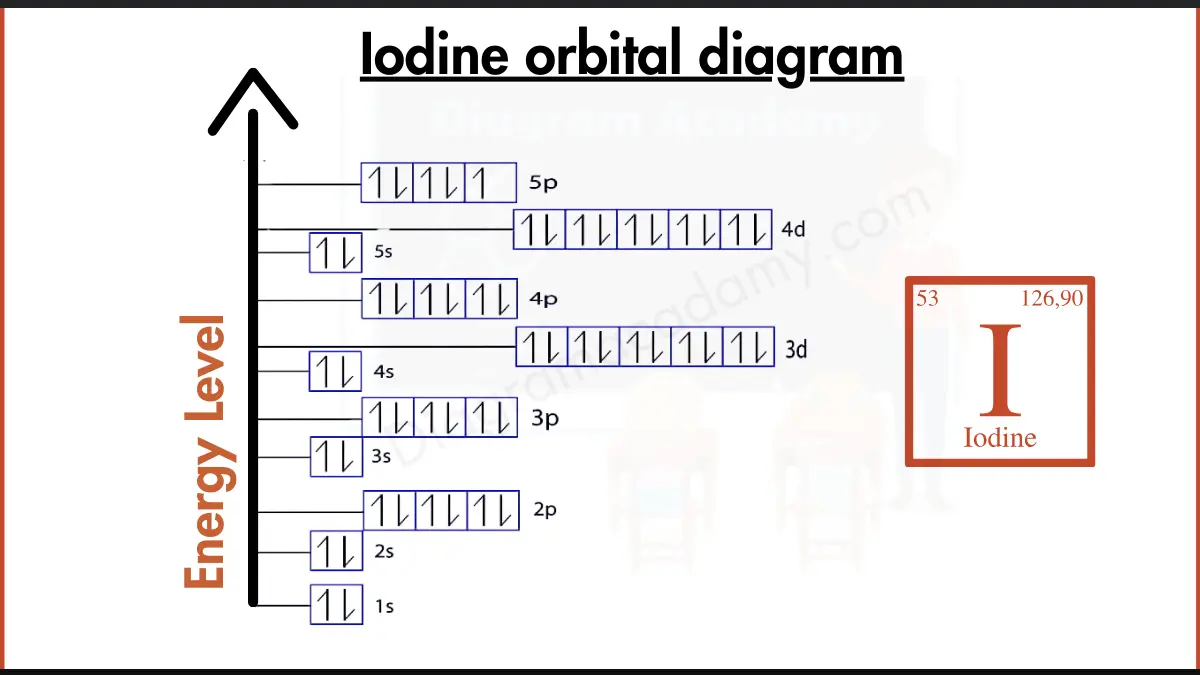
Orbital Diagram of Iodine

Image showing Orbital Diagram of Iodine

Iodine (I) joins the club of reactive halogens. Its outer shell holds seven electrons, written as [Kr] 4d¹⁰ 5s² 5p⁵. This configuration, with a partially filled 5p subshell, makes Iodine very reactive. Unlike the stable noble gases with packed outer shells, Iodine readily seeks to gain one electron to achieve a full outer shell and become more stable, forming the negatively charged iodide ion (I⁻)

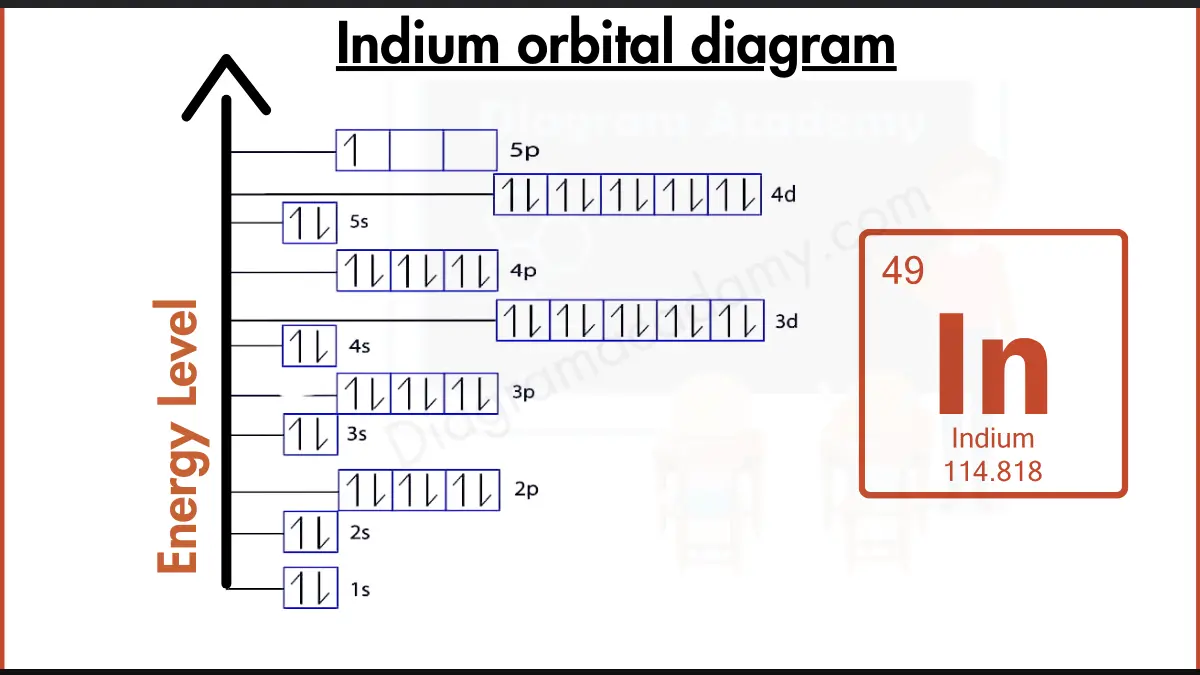
Orbital Diagram of Indium (In)

indium orbital diagram showing electron configuration and energy levels

Indium (In) sits on the fence between stability and reactivity. Its outer shell isn’t completely full, containing one electron in the 5p subshell ([Kr] 4d¹⁰ 5s² 5p¹). This incomplete configuration, compared to noble gases with full outer shells, makes Indium more reactive. However, the filled 4d subshell provides some stability compared to elements with electrons in multiple incomplete subshells.

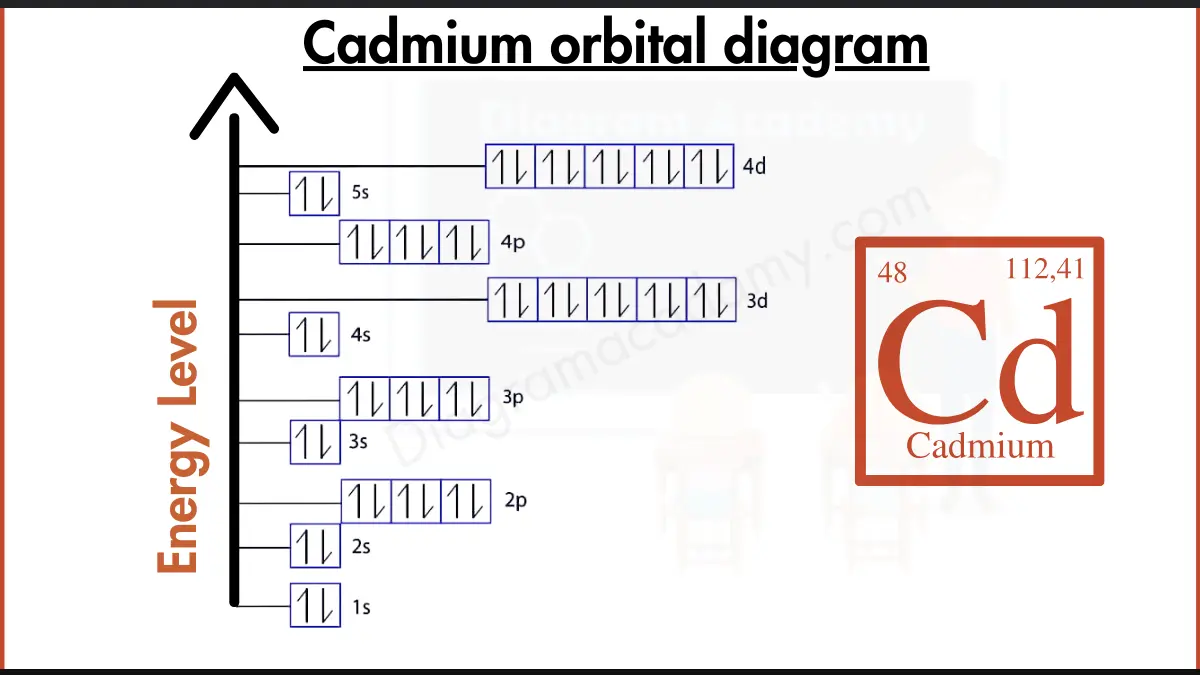
Orbital Diagram of Cadmium

Image showing Orbital Diagram of Cadmium

Cadmium (Cd) isn’t as stable as the noble gases, but it’s not far off. Its outer shell holds two electrons in the 5s subshell, written as [Kr] 4d¹⁰ 5s². This configuration, with a filled 4d subshell and electrons in the 5s, makes Cadmium somewhat stable but still reactive compared to true noble gases. It hasn’t quite achieved the full outer shell magic for ultimate stability.